Quiet Confidence — a physical field guide for technical leaders
Promoted into leadership before you felt ready?
Quiet Confidence is a short physical field guide for technical leaders
who were handed the role before they were handed the foundation.
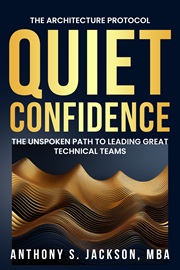
If you were promoted because you were excellent at the work — but now feedback, coaching, delegation, and leadership identity all feel fuzzier than they should — this book was written for you.
266 pages, paperback. Built to read in a sitting or two, and to keep on your desk before a 1:1.
Follows Tom, a senior engineer three months into his first management role, his story becomes your recognition.
$9.95, delivered to your door. One-year full refund, book and shipping, no interrogation.
There is an assumption built into every technical promotion.
It is rarely stated because it sounds reasonable enough that no one examines it. The assumption: if you were good enough to be promoted, you were ready to lead. The role came with the qualification. Your prior performance was the preparation. The organization assumed the transition would happen on its own, because it always had before.
Call it the Competence Assumption. It is the invisible architecture running under virtually every technical leadership career, installed by organizations that were too busy promoting the right people to notice they had never built the bridge between what made those people exceptional and what leadership actually requires. The bridge doesn't build itself. The Competence Assumption says it does.
The assumption is not malicious. It is not even wrong about your capability. It is wrong about the transition. And it has cost more technically excellent leaders their first two years than any personality flaw or skill gap ever has. This book exists because the Competence Assumption leaves a specific, nameable gap that can be filled.
Technical leaders don't struggle because they lack ability. They struggle because the transition was never named.
Quiet Confidence is written for technical leaders who are already capable, already working hard, and already doing most things right. It does not ask you to become a different kind of person. It gives you the foundation you were never handed.
This is not a mindset book. It is not motivational. It does not tell you to believe in yourself. It shows you what to build instead.
(Already past this stage, trust your team but need to design the system around them? LeadershipOS™ is the next book.)
The problem you're having is not a confidence problem. It's a foundation problem.
Most leadership books try to improve you: your communication style, your executive presence, your ability to inspire. Quiet Confidence starts from a different premise. You are carrying weight that a frame should hold. Decisions feel uncertain because no one gave you the model that makes the next move clear. The second-guessing accumulates not because you lack judgment but because the internal operating system was never installed.
This book installs it.
It follows Tom, a technically brilliant engineer, three months into his first management role, as he navigates the gap between what made him exceptional as an individual contributor and what leadership actually requires. His story is a composite built from hundreds of coaching engagements. The details are fictional. The dynamics are not. At some point, you'll stop reading about Tom and start reading about yourself.
The book moves in three phases.
The Trap.
Tom gets promoted, and almost immediately, something goes wrong, not dramatically, but quietly. His team slows down when he speeds up. Decisions flow toward him not because he demands them, but because he's capable of handling them. This section names what's structurally happening when a technically excellent person starts leading: The Competence Inversion, The Overcompensation Loop, the Trust Gap, not what they should do differently, but why it almost always unfolds the same way.
The Turn.
Tom begins to see the system he's operating inside. He doesn't stop caring about the technical work. He doesn't become a different person. But he learns to make different decisions, about when to intervene and when to hold back, about what trust actually requires, about what the Delegation Trap looks like when you're inside it and how to recognize when it's complete. This section is practical in the most specific sense: not frameworks to apply but patterns to recognize, in yourself and in the system around you.
What's Built.
By the end, Tom has crossed a threshold. Not because the difficulty disappeared, but because he no longer needs the system to validate him. The Trust Flywheel is in motion. The Internal Game has stabilized. A leader who no longer needs external confirmation can finally see the system clearly enough to act on it.
The book ends at that threshold. What comes after it, designing the conditions so the system doesn't require one person to hold it together, is a different problem and a different book: LeadershipOS™.
Patterns I've named from thirty years inside these transitions:
The Competence Inversion: Why the habits that earned your promotion are now working against the system you're responsible for building, and the specific shift that changes this.
The Delegation Trap: What delegation looks like when it's actually complete, not when the work is assigned, but when the decision stops routing back to you.
You'll also recognize the anxiety-control cycle that erodes trust and reduces your team's autonomy, and how to break it. Why trust resets when your structural position changes, regardless of your intentions, and how to rebuild it from the right foundation. How consistent leadership behavior creates compounding momentum, and how to read the warning signs when it begins to reverse. And why a stable system can produce an unstable internal experience, and how to stop misreading your own discomfort as evidence of failure.
Four things change when the foundation is in place.
1. You know what to say before you walk into the room.
Not because you memorized the right words. Because you have a frame. The feedback conversation that kept getting rescheduled happens when it should. The difficult observation gets named instead of softened into something that doesn't land. The pattern gets addressed while it's still addressable.
2. The Competence Inversion stops running.
You stop being the answer to every hard question, not because you step back from the work, but because you've built the conditions where others step into it. Your presence stops creating gravity. Your team's capability grows in the space that used to fill with your involvement.
3. The job starts feeling like yours.
Not borrowed. Not performed. The engineer who got promoted stops being the story you tell yourself and becomes the context for why you lead the way you do. Quiet confidence isn't loud. It doesn't announce itself. It shows up in how you handle the thing that went wrong on a Thursday, and in how your team reads you in the room.
4. The technical leaders you develop inherit a frame, not a dependency on yours.
The clearest sign that the internal work is complete is that you can transmit it. You stop being the answer to questions you don't want to be answering because you've given others what you now have. That is the mark most technical leaders never reach. Quiet Confidence is how you get there.
Why I Wrote This Book
One particular retrospective became the turning point. I was consulting at a client site. The team fell short of a sprint commitment. The client feedback was rough. A competing firm in the room took the opportunity to make it worse. I finished the meeting and walked to a parking garage in Hartford, Connecticut. I sat in my car and didn't feel like a leader. I had learned to lead in Boy Scouts, earned it, lived it. This was something completely different. I felt out of place, underprepared, and genuinely uncertain whether I was the right person for the job.
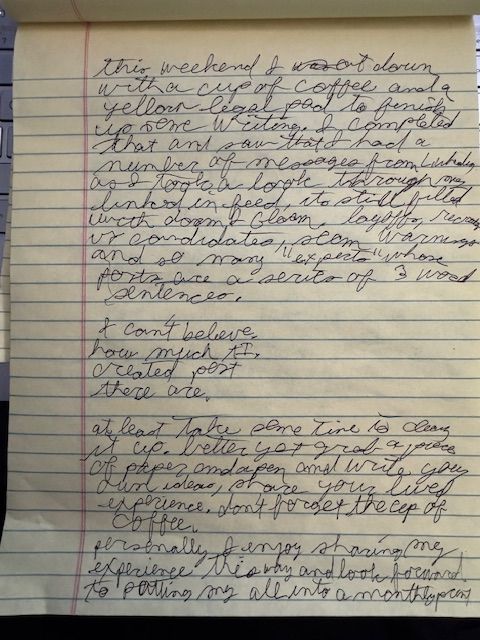
I picked up a yellow legal pad and my favorite pen. I started writing. Not notes. Not a plan. Just the entire situation, all of it, pouring out onto the page. That became a habit. Years of notebooks. Multiple companies. Many teams.
Before that day I had done what most ambitious people do: read the books, went back to school for an MBA in IT Management, followed the HR advice. Team-building exercises my team politely endured. Conversations with executives in technical terms, watching their eyes glaze over. 1:1s that were awkward silences and status updates. None of it addressed the thing that was actually costing me the most: I didn't know how to see myself in the role.
What I kept finding, across all of that writing, is that the internal uncertainty doesn't resolve itself with experience. I watched technically excellent people spend years managing their uncertainty, getting better at hiding it, becoming more competent at the tactical work, without ever building the internal foundation that makes the role feel like theirs. The frame was what was missing. Not the skills. The frame.
What I learned, slowly, is that the internal gap in technical leadership almost never lives where it appears to. The feedback conversation that keeps getting rescheduled isn't a confidence problem. The identity question that persists after years of reasonable performance isn't a you problem. Naming what's actually happening is the work this book does.
He's the real deal. I came from the Datacenter side, but it's very much the same. One day you are responsible for tech, then the next day for people, and that gap isn't small.

I have spent thirty years watching where technical leadership actually breaks down. The gap is almost never where it appears to be. You cannot build the right foundation on top of a wrong diagnosis. That is not a metaphor. It is the exact failure mode this book is built to address.
Quiet Confidence is $9.95, delivered to your door.
Buy direct from the author. If it doesn't deliver, send it back within a year: full refund, book and shipping, no interrogation.
The only thing I ask: read it.

If you read this book and it doesn't deliver, for any reason, no explanation required, send it back within one year. I will refund every penny. The book cost and the shipping, both.
No interrogation. No friction. No asterisk.
I've been inside enough organizations to know when something works and when it doesn't. This works. If it doesn't work for you, I want to know that too.
Send it back. You'll hear from me directly.
Quiet Confidence builds the internal foundation. Once that foundation is in place, another problem becomes visible, and it is more frustrating than the first, because you have done the work. You stopped second-guessing in the room. The identity question is settled. You came back on Monday, and the decisions were still routing to you, the escalations were still landing on your desk, and the team was still running on you rather than on a system. That isn't a failure of the internal work. It's the next problem, and it has a different solution. That's exactly where LeadershipOS™ begins, and the LeadershipOS™ Inner Circle is the monthly newsletter where the work in this book continues.
The Architecture Protocol Series: Three Books. Three Transitions. One Sequence.
Book 1: Quiet Confidence
The internal transition. Who you are as a leader, and what you were never given to make the identity shift complete.
Book 2: LeadershipOS™
The system transition. What you build so the team runs without you at the center.
Book 3: The Edge Case
The structural exception. What your best architecture still can't resolve, and how to hold it without flinching.
About Anthony S. Jackson

Thirty years inside technical organizations. This is what the pattern looks like.
I was thrown into my first management role the same way most technical leaders are: with a title, a team, and no map. What I eventually understood, after thirty years of watching the same transition break technically excellent people in completely different organizations, is that the gap isn't personal, and it isn't permanent. This book builds the foundation that closes it.
I have spent thirty years inside technical organizations, as an individual contributor, engineering manager, director, VP, and CTO-level leader. I have led teams from 5 to 40+ across healthcare tech, SaaS platforms, enterprise software, and consulting. I have been laid off, left with the scars of organizations that collapsed from within, built platforms that scaled, and designed leadership systems that outlasted me. The foundation this book describes has been built through people I worked with directly, before this book existed. I cannot name them, but they are out there, and their experience is baked into what you are reading.
Quiet Confidence is the product of thirty years of pattern recognition: observing where the internal transition from technical excellence to leadership identity breaks down, what the gap costs the people living inside it, and what the foundation looks like when it is built correctly. The leadership story at the center of this book is a composite. The internal experience it describes is not.
Every month, I write about what technical leaders are actually navigating inside the LeadershipOS™ Inner Circle. I also work with technical leaders through group programs and advisory engagements.
I am the author of Quiet Confidence and LeadershipOS™. The third book in The Architecture Protocol Series, The Edge Case, is available now for pre-order and ships Mid-September 2026.
Read it before you buy it. Chapter 1 is yours free.
If you made it this far and you're still deciding, Chapter 1 is yours free. It's called "The Accidental Manager" and it covers the transition the rest of the book builds from: why the discomfort of early technical leadership isn't a character flaw or a warning sign, why confidence doesn't arrive with the title, and what it's actually built from. If you've ever earned a promotion and then spent the next six months waiting for the confidence that was supposed to come with it, this chapter will leave a permanent mark on how you understand that experience.
You'll be added to my email list for technical leaders. Each email covers one idea from inside the framework. Nothing motivational. Nothing generic. One thing that changes how you see the week you're already in.
Or:
The thinking in this book continues in Anthony's free daily email for technical leaders.